

Recent advances in the understandingmanagement of chronic pancreatitis pain
Abdominal pain is the most common symptom of chronic pancreatitis (CP)is often debilitating for patientsvery difficult to treat. To date, there exists no cure for the disease. Treatment strategies focus on symptom managementon mitigation of disease progression by reducing toxin exposureavoiding recurrent inflammatory events. Traditional treatment protocols start with medical management followed by consideration of proceduralsurgical intervention on selected patients with severepersistent pain. The incorporation of adjuvant therapies to treat comorbidities including psychiatric disorders, exocrine pancreatic insufficiency, mineral bone disease, frailty,malnutrition, are in its early stages. Recent clinical studiesanimal models have been designed to improve investigationthe pathophysiology of CP pain, as well as to improve pain management. Despite the array of tools available, many therapeutic options for the management of CP pain provide incomplete relief. There still remains much to discover about the neural regulation of pancreas-related pain. In this review, we will discuss research from the last 5 years that has provided new insightsnovel methods of pain phenotypingthe pathophysiology of CP pain. These discoveries have led to improvements in patient selection for optimization of outcomes for both medicalprocedural management,identification of potential future therapies.

Post-endoscopic retrograde cholangiopancreatography pancreatitis: a review
Endoscopic retrograde cholangiopancreatography (ERCP) has continued to develop over recent decades with regard to both indications for its useimprovements in technique. The most common complication is post-ERCP pancreatitis (PEP) with incidence rates being reported at ~10%. The exact mechanism of PEP is unknown but is likely multifactorial with papillary edema contributing to the activation of the inflammatory cascade playing an important role. Selected risk factors include patient-related factors (female sex, younger age, sphincter of Oddi dysfunction,history of PEP)procedure-related factors (difficult cannulation, multiple pancreatic duct guidewire passes, pancreatic acinarization, multiple pancreatic duct contrast injections,precut sphincterotomy). Several preventative prophylactic strategies have been posited; however, current guidelines recommend the use of rectal non-steroidal anti-inflammatory drugs (NSAIDs), aggressive intravenous (IV) fluid hydration,pancreatic duct stents. Appropriate patient selectionthe use of noninvasive imaging modalities for diagnosis of pancreaticobiliary abnormalities is a key aspect in prevention. Future studies continue to explore various pharmacologic, procedure-related,combination strategies for preventionwill be important as the use of ERCP continues to grow.
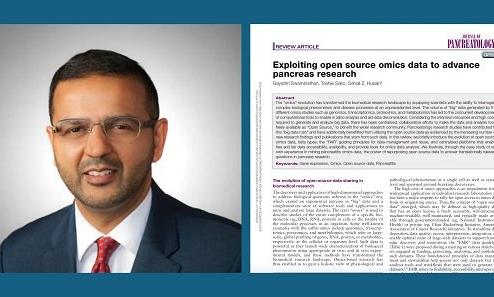
Exploiting open source omics data to advance pancreas research
The “omics” revolution has transformed the biomedical research landscape by equipping scientists with the ability to interrogate complex biological phenomenondisease processes at an unprecedented level. The volume of “big” data generated by the different omics studies such as genomics, transcriptomics, proteomics,metabolomics has led to the concurrent development of computational tools to enable in silico analysisaid data deconvolution. Considering the intensive resourceshigh costs required to generateanalyze big data, there has been centralized, collaborative efforts to make the dataanalysis tools freely available as “Open Source,” to benefit the wider research community. Pancreatology research studies have contributed to this “big data rush”have additionally benefitted from utilizing the open source data as evidenced by the increasing number of new research findingspublications that stem from such data. In this review, we briefly introduce the evolution of open source omics data, data types, the “FAIR” guiding principles for data managementreuse,centralized platforms that enable freefair data accessibility, availability,provide tools for omics data analysis. We illustrate, through the case study of our own experience in mining pancreatitis omics data, the power of repurposing open source data to answer translationally relevant questions in pancreas research.

Acute pancreatitis: pathogenesisemerging therapies
Acute pancreatitis is a severe inflammatory disorder with limited treatment options. Improved understanding of disease mechanisms has led to newpotential therapies. Here we summarize what we view as some of the most promising new therapies for treating acute pancreatitis, emphasizing the rationale of specific treatments based on disease mechanisms. Targeted pharmacologic interventions are highlighted. We explore potential treatment benefitsrisks concerning reducing acute injury, minimizing complications,improving long-term outcomes. Mechanisms associated with acute pancreatitis initiation, perpetuation,reconstitution are highlighted, along with potential therapeutic targetshow these relate to new treatments.
地址:北京市东城区帅府园1号老楼12号楼227室
电话:010-69154420
邮箱:cap@cap.org.cn